Over each of the various treatments I've been on, every so often the subject of willpower comes up. Many are impressed by a never-say-die attitude. But to me, survival is only so impressive.
The inner-strength, Willpower, is an amazing force and I've come to find that there are two main manifestations.
The unyielding force that protects, and keeps you going, is resistance. It is defensive, for me, it has helped me ignore any other option but the next treatment, and getting cured. I resist the temptations that have come in front of me, that may cause my liver damage. In college, many options came before me. And for me, there is no morality regarding alcohol, drugs or anything else of that nature, there is only my mortality. How many years of my life, is that drink worth? How long can I tolerate this before I need whatever pain med they'll give me?
(There are certain pain meds which aren't as impactful on the liver. Here's a good breakdown of NSAIDs Opiates and OTCs, but there isn't exactly a standard in practice, so not every nurse understands the degree of liver damage/how much a patient may be able to tolerate a pain med. A few years ago I reframed what I told nurses: I have HCV, my liver is decomp, and I refuse morphine, please advise on pain meds with less hepatic impact.)
I have spent so much energy on resistance, that I've lost a lot of the other very similar manifestation.
Persistence, the ability to force that willpower on the world, to keep moving forward similarly unrelenting like resistance, but in offensive stance. It is the drive, the motivation that feeds the need to be bigger than ones' self. I am finding my fuel for this, in taking the experience and understanding of other's I've gained through the introspection of treatment and its subsequent failure. In a way taking to my personal shortcomings and applying that same attitude. Much like in treatment, it is the slow grading process of constant trial that has given me more value for the goal. If I am to run, I should walk first, if am to walk, I should crawl first, and if I am to get off my ass I should probably get up first.
The two manifestations are methodically the same, but used for different purposes. When fear or doubt begins to could my vision, I find strength in review of my last choices. But rather than focus on what could I have done, I break down what I did, and turn my attention to the notion that given I've made these choices, how will each impact my future. It's part of the process of introspection that pushed me forward through treatment, and helps illuminate the path I wish to take. The light of hope and confidence does wonders to dispel fear and doubt.
About Me

- Rick Nash
- Peginterferon-Ribavirin, Failed it twice. Incivek, Failed it. Sovaldi Olysio, failed it. Harvoni, failed it... Transplant Patient Zepatier and Sovaldi...we'll find out!
Monday, April 6, 2015

Thursday, March 19, 2015
Invisible Liabilities
In middle and high school in the United States, schools have a compulsory physical education department in which students have to be in enrolled in so many years of physical education. Many schools allow opt-outs for special PE like marching band, or certain team sports. Students with special needs often have separate PE programs which cater to their abilities.
Due to the circumstances of diagnosis, physical excretion was often cited as a reason for the dark urine that day. My doctors ultimately came to the conclusion that it would be risky for me to be involved in PE or any other team sports. Risk to others was a very minor factor, it was because I would be unable to control the constraints of the exercise, and would be at the mercy of often unusually demanding coaches. The school agreed, in hindsight I realize their rationale for the agreement fell more on liability than on my situation. I was pulled out of my PE class less than half-way through the trimester.
My PE coach, knowing why I wasn't in PE, gave me a hard time about as he put it "quitting."
(found out a few years ago he was "let go" due to harassment allegations. Shoulda known he was a quitter.)
Without a class to enroll me, I was placed in the library. I had gained a reputation among teachers and staff as an insubordinate student, which I suspect didn't help my prospects in terms of options for classes. My acting out was due in part to an understanding that at twenty five I would begin a steady descent of my physical ability, that it would be unlikely I would make it to my parents age, and due to my mother's diagnosis and subsequent treatment during this time.
While in the library, I read every comic book, national geographic and graphic novel available. When other classes would come in to use the library I was sequestered off to another area. Eventually when the new trimester came I was allowed to enroll in a class again. I took a class called Lifeskills, it taught teambuilding, Greek/Latin roots, among many other things.
Without PE, I took ROP classes, and lots of art classes. I went to try out for track and field, and was informed that because I had a PE exemption, I would not be allowed to.
One of the more frustrating issues I came face to face with early on was the reality of an invisible disability.It was the reason my PE coach in middle school judged me so harshly, it was the reason coaches and school administrators didn't believe me. In high school I came in with more or less a clean slate, but I was a liar in their eyes.
I could find nothing to fight it, so instead I embraced it. I was kicked out of classes on a weekly basis. In one class, a drawer was dedicated to taking away the toys I'd bring in. At one point I brought 4 Japanese phonebooks just to see what my teacher would do. In one class I instructed not to leave my seat at any point during the class. So prior to class I found a desk with a seat that could be removed. As class went on, I would periodically leave (taking the seat with me) to buy sodas/food from the machine outside. As he would look up at me, he would see me with different things each time. He was never able to catch me, as I would attach a bolt into the seat to fasten it when class ended.
Each of my teachers knew my situation, they were aware I had Hep C. During student senate elections, upon realizing that I was the winning candidate, one teacher demanded a recount, put a student who had no interest in it as a candidate and declared them the winner. I was hostage to the results my own misbehavior. In the mornings, my classmates would gripe about PE, be exhausted from practice, make new friends from the bonding experiences that come with team sports. I couldn't relate. From my diagnosis, I had never even been in a real locker room. Until I was 22 and I joined a gym, I just assumed they were huge bathrooms with cubbies for your things.
It was then I realized, they were just huge fancy bathrooms with cubbies and lots of naked old men.
Monday, March 16, 2015
Friends with Benefits.
Well Shit, I'm not a fan of this topic.
Not at all, it's just a shitty topic to have to write about because so few people understand the scope of it all.
Health(care) Insurance.
So let's get to the grit of it.
Healthcare basics:
Healthcare as an employee (which is the most common way about it in the united states).
Insurance and compensation are part of the bargaining agreement between you and your employer when you start working for them.
Insurance is a weird thing, but ultimately the employer is giving you a discounted insurance plan in lieu of other financial compensation. There are some companies that will pay you to opt out of their insurance, because it's cheaper for them as long as they meet their units needed for group discount.
So when you get handed a dozen options from your HR department come fall, I'm sure you've noticed a few plans are ridiculously expensive. In some circumstances companies have executive plans which cover more than the options you were given.
Your pay-grade usually determines the allowance you get to buy a healthcare plan. It would be prudent to know that the ACA is the first real legislation to present a progressive tax system that extends to this compensation.
Why should you give two shits about all of this? Understanding benefits negotiations is as essential as negotiating your wages. Since it's such an information disparity, most potential employees do not know what they're going to get until they're hired. It's always good to know what insurance plans are offered by a company and how they compare to other options.
It's also often the case that you may find that your doctor is no longer covered when you switch employers, even if it looks like the same plan. That's because Healthcare plans usually have a list of doctors within their program. There are some medical groups that have associated healthcare insurance to alleviate this issue, and in a sense compete over your care without your say.
The necessity of Insurance.
Health insurance since the early 80s has been a rapidly growing part of paying for a hospital bill. Insurance is and always will be an all or nothing deal. Whenever insurance becomes part of a marketplace it sets group rates and raises prices for those without insurance. This alongside Pharma patents, costs of medical equipment, and a disturbingly small pool of workers has helped to create some of the unusually high medical costs we see today.
Because healthcare insurance has become part of an employee's compensation, healthcare is more often the primary means of payment for most medical groups. The employers bargain with insurance companies for rates and plans, those insurance plans present proposals to medical groups. For the most part the conversation regarding what you pay for healthcare is never up to your needs, and the services you choose from are what the companies have agreed upon. Limiting your choices as a healthcare consumer.
Exchanges allow for consumers to pick plans they would have otherwise never seen. Their major limit is their geographic region. If you've used Covered Ca, Healthcare.gov or even a private exchange you've seen how much better many of those options can be.
Payment without insurance is always higher, and if you're savvy you might be able to negotiate a payment plan with the hospital's billing and/or finical assistance dept.
But regardless you'll pay more. This is one of the fundamental problems the ACA attempts to alleviate. The reality that if you're employer doesn't give you benefits(usually not full-time), underemployed, or hanging income-wise out between 17k and 40k per year: you simply go without insurance, and risk falling into serious debt/health problems when something bad happens health-wise.
It also alleviates the issue of employer based competition by opening up the markets to consumers via exchanges.
In our modern society, being so close quarters and risking illness/injury daily, it is necessary.
So... I guess I should get to why I'm on this subject right now.
Well, the reason I'm talking about this is because this last week the Congressional Budget Office announced its projections for 2015. The ACA (Obamacare) has a very interesting track record.
While there are a lot of disagreements as to why these changes are occurring and how it affects us, esp. with King V Burwell presently in the Supreme Court. To insure our health as a nation, the subsidy is an important factor alongside the exchange.
What's noted here are some relevant facts: Affordable Care Act(Obamacare) will have lower projections in terms of cost and number of people covered using the exchange.
So this is the summary full text of changes expected in 2013
And this is the real change in 2015
In order to better illustrate the exact changes, I've made some comparison charts using the data from the Congressional Budget Office:
....The full text with tables is located on HCVME.ORG...
Tuesday, March 10, 2015
The real four words that doom Obamacare
Last year I signed up for Covered California. It was the first year it was offered, and it has been a lifesaver....literally.
I have come to know healthcare insurance policy and the laws regarding it very well, but not by choice.
Before the Affordable Care Act (Obamacare) things were difficult regarding healthcare matters. When I was in my last year of college I was insured under my mother and I was looking at another round of treatment, I only had one problem.
When I graduated I'd lose insurance, if I lost insurance my disease was a pre-existing condition and would require months to a year to appeal and fight simply to obtain health insurance. And if I did manage to get the insurance after having lost it, I'd still have to pay for the months that I retroactively had coverage.
So I stayed in school while working a 40 hour work week, but not being able to claim benefits due to a policy where I would take every 18th day off to ensure that payroll wouldn't yell at my boss. And I would be exempt from benefits.
This is what allowed me to afford my second round of treatment. School and full time work, while on Interferon/Ribavirin is not something I'd recommend. As I've stated, my second treatment failed, it took some time to find a benefited position. But once I was able to secure a benefited contract and avoid the 18 day rule, trying to figure out when and how I'd be able to jump on the next treatment was the next hurdle. During this time, I found myself roughing through five days of internal bleeding due to esophageal varicies, a sign of my decaying state. Insurance became a hectic issue near the end of my time at the school district, ultimately I was issued three pink slips and two of them were redacted.
 With my third treatment hanging in the balance I sought employment elsewhere. I was 25 at the time, and luckily the ACA had just allowed sons/daughters to be on their parent's healthcare until 26. But the pre-existing condition situation was still pretty shitty. And with all the hubbub about gutting the law I began my third treatment before I could lose coverage.
As you know, the third treatment failed, and I found myself turning 26 and scurrying for options. Thanks to my mom's knowledge of healthcare law, I made sure I had my ducks in a row. With my HIPPA Certificate of Creditable Coverage (which allows an individual to avoid the pre-existing exclusion) in hand I bounced from insurance to COBRA for the two month gap between insurance plans. A car accident delayed things, but after a few months of recovery, I began keeping an eye out for new treatments.
My doc at the time was opposed to new treatments.
Not because of the new treatments' efficacy, but as I would find out, because of a vested interest he had in the Interferon/Ribavirin he'd prescribed me twice before. As 2013 came to a close I started a new job, and switched healthcare to a far better program. Before the year ended I returned to a position where healthcare was not affordable as an option. So as the year ended, I found myself in need of healthcare once again.
I quickly signed up for Covered CA, and found a nearly identical plan for slightly less than I was paying previously. Covered CA was a pain to get into, but ultimately all of the tests, doctors visits, one treatment, alongside the first half of a second treatment, and a week+ hospital stay hit the max out of pocket of $4,000.00. In combination with my insurance of around 250 a month (after the subsidy) It cost me around $7-8,000.00 for the year. My year total billed was for over a quarter million dollars.
Over my life, my healthcare needs have racked up total billed of over 2 million. Keep in mind, that up until a year ago, I was on private insurance. And I worked my ass off just to make sure I could have it, or afford it.
Without the ACA, I would be in massive debt, or about to be in massive debt due to transplant on MediCal.
The most prominent points against Obamacare have drawn weight from it being unconstitutional. Having read both the ACA and the constitution several times, as well as several briefs related to healthcare, government spending and the subsidy, I have yet to see anything which would indicate the case. If you know of something, I'd love to see some legal standing.
To those of you who aren't aware of the present court case King v. Burwell (and the related cases) began oral arguments on March 4. Essentially the lynchpin in the case boils down to the ACA's wording "through exchanges established by the state" The question becomes to what are they referring?
The State: The Government (be it federal or state)
The State: The Federal Government.
The State: Referring to the individual states.
The argument is that this definition of "The State" will determine federal subsidy eligibility. In the first scenario nothing changes.
If it's the individual states (as King presents) then let's look at Georgia, since Georgia has no exchange set up, they could still use the federal exchange however they would be unable to obtain the subsidy.
To those of you not from the US reading this...Yes. The case is that absurd. It's about four people who apparently have losses due the subsidy. Two of which have shown that they're eligible for exemption the other two were bankrupt, and paid less for healthcare because of the subsidy.
It won't directly affect California, because Covered CA was created under those provisions. If King wins, it's not some death spiral as pundits keep shouting. But it is a serious problem for those people who need those subsidies to help cut down on healthcare costs.
There is an odd belief in our country that only the sickest seek insurance. If this were 1960, you'd be right, purely because clinics and pharmacies were not yet massive centralized agencies who bargain on larger scale.
Those who will hurt the most are simply those who can barely afford it. Those who are on the edge of their paycheck will find a broken arm, a bad flu season or any number of ordinary things, pushing them lower financially until they eventually do qualify for insurance through MediCal/Medicaid or end up in serious debt.
Healthcare Insurance as we know it has become access to healthcare providers, the reason it is in a nation's interest to ensure access to it, is to ensure the health and well-being of its people. It is unfortunate that many must find themselves fighting for health insurance, just so they can fight illness and/or injury.
I implore you to talk openly regarding the ACA, and encourage a dialogue that helps people understand its merit. The less we care about it, the less choice we have in the matter. The court will deliberate over the issue for some time, during this time it's important to discuss where it should be improved, and how to ensure equal access to healthcare.
Twitter has become a source of trending opinion and information around the world. Social Media is our tool to let the world know what is important to us. So in truth the four words that will destroy Obamacare are not "Established By The State." But rather Top Conservatives On Twitter #TCOT.
I have come to know healthcare insurance policy and the laws regarding it very well, but not by choice.
Before the Affordable Care Act (Obamacare) things were difficult regarding healthcare matters. When I was in my last year of college I was insured under my mother and I was looking at another round of treatment, I only had one problem.
When I graduated I'd lose insurance, if I lost insurance my disease was a pre-existing condition and would require months to a year to appeal and fight simply to obtain health insurance. And if I did manage to get the insurance after having lost it, I'd still have to pay for the months that I retroactively had coverage.
So I stayed in school while working a 40 hour work week, but not being able to claim benefits due to a policy where I would take every 18th day off to ensure that payroll wouldn't yell at my boss. And I would be exempt from benefits.
This is what allowed me to afford my second round of treatment. School and full time work, while on Interferon/Ribavirin is not something I'd recommend. As I've stated, my second treatment failed, it took some time to find a benefited position. But once I was able to secure a benefited contract and avoid the 18 day rule, trying to figure out when and how I'd be able to jump on the next treatment was the next hurdle. During this time, I found myself roughing through five days of internal bleeding due to esophageal varicies, a sign of my decaying state. Insurance became a hectic issue near the end of my time at the school district, ultimately I was issued three pink slips and two of them were redacted.
My doc at the time was opposed to new treatments.
Not because of the new treatments' efficacy, but as I would find out, because of a vested interest he had in the Interferon/Ribavirin he'd prescribed me twice before. As 2013 came to a close I started a new job, and switched healthcare to a far better program. Before the year ended I returned to a position where healthcare was not affordable as an option. So as the year ended, I found myself in need of healthcare once again.
I quickly signed up for Covered CA, and found a nearly identical plan for slightly less than I was paying previously. Covered CA was a pain to get into, but ultimately all of the tests, doctors visits, one treatment, alongside the first half of a second treatment, and a week+ hospital stay hit the max out of pocket of $4,000.00. In combination with my insurance of around 250 a month (after the subsidy) It cost me around $7-8,000.00 for the year. My year total billed was for over a quarter million dollars.
Over my life, my healthcare needs have racked up total billed of over 2 million. Keep in mind, that up until a year ago, I was on private insurance. And I worked my ass off just to make sure I could have it, or afford it.
Without the ACA, I would be in massive debt, or about to be in massive debt due to transplant on MediCal.
The most prominent points against Obamacare have drawn weight from it being unconstitutional. Having read both the ACA and the constitution several times, as well as several briefs related to healthcare, government spending and the subsidy, I have yet to see anything which would indicate the case. If you know of something, I'd love to see some legal standing.
To those of you who aren't aware of the present court case King v. Burwell (and the related cases) began oral arguments on March 4. Essentially the lynchpin in the case boils down to the ACA's wording "through exchanges established by the state" The question becomes to what are they referring?
The State: The Government (be it federal or state)
The State: The Federal Government.
The State: Referring to the individual states.
The argument is that this definition of "The State" will determine federal subsidy eligibility. In the first scenario nothing changes.
If it's the individual states (as King presents) then let's look at Georgia, since Georgia has no exchange set up, they could still use the federal exchange however they would be unable to obtain the subsidy.
To those of you not from the US reading this...Yes. The case is that absurd. It's about four people who apparently have losses due the subsidy. Two of which have shown that they're eligible for exemption the other two were bankrupt, and paid less for healthcare because of the subsidy.
It won't directly affect California, because Covered CA was created under those provisions. If King wins, it's not some death spiral as pundits keep shouting. But it is a serious problem for those people who need those subsidies to help cut down on healthcare costs.
There is an odd belief in our country that only the sickest seek insurance. If this were 1960, you'd be right, purely because clinics and pharmacies were not yet massive centralized agencies who bargain on larger scale.
Those who will hurt the most are simply those who can barely afford it. Those who are on the edge of their paycheck will find a broken arm, a bad flu season or any number of ordinary things, pushing them lower financially until they eventually do qualify for insurance through MediCal/Medicaid or end up in serious debt.
Healthcare Insurance as we know it has become access to healthcare providers, the reason it is in a nation's interest to ensure access to it, is to ensure the health and well-being of its people. It is unfortunate that many must find themselves fighting for health insurance, just so they can fight illness and/or injury.
I implore you to talk openly regarding the ACA, and encourage a dialogue that helps people understand its merit. The less we care about it, the less choice we have in the matter. The court will deliberate over the issue for some time, during this time it's important to discuss where it should be improved, and how to ensure equal access to healthcare.
Twitter has become a source of trending opinion and information around the world. Social Media is our tool to let the world know what is important to us. So in truth the four words that will destroy Obamacare are not "Established By The State." But rather Top Conservatives On Twitter #TCOT.
Monday, February 16, 2015
Marlboro Country
A few hours ago i watched a fantastic episode of Last Week Tonight. I've linked the episode below.
The show highlights how just how big, big tobacco has become, and how they can often stomp all over many countries in doing whatever they want.
Smoking is a major issue worldwide, and if companies can push countries and health organizations around there is something we need to do about. This simple thing, is not the solution, but it is going in the right direction. The largest source of cancer related death in the US is still lung cancer. but that's not the only cancer one can get from tobacco, it also raises your risks from mouth, throat, and liver cancer.
Hepatocellular carcinoma is the most common type of liver cancer.
However, a lot of that has to do with adult behavior, cultural practices and of course smoking tendencies.
So it may just be a simple thing, but help others quit.
Don't be Maybe. Just Don't Smoke.
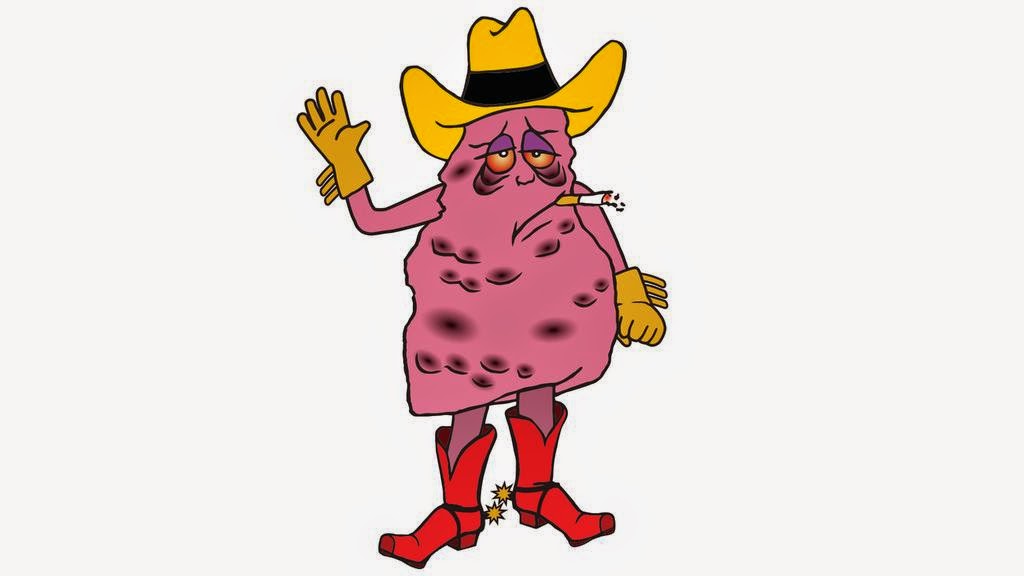 |
| #JeffWeCan Marlboro spokesman |
The show highlights how just how big, big tobacco has become, and how they can often stomp all over many countries in doing whatever they want.
Smoking is a major issue worldwide, and if companies can push countries and health organizations around there is something we need to do about. This simple thing, is not the solution, but it is going in the right direction. The largest source of cancer related death in the US is still lung cancer. but that's not the only cancer one can get from tobacco, it also raises your risks from mouth, throat, and liver cancer.
Hepatocellular carcinoma is the most common type of liver cancer.
"...almost half the cases of liver cancer in the study were associated with smoking, 16% were associated with obesity and 10% were associated with heavy alcohol consumption. Almost 21% of cases were associated with hepatitis C and 13% with hepatitis B."At some point i'm sure i'll post a blog regarding polycyclic aromatic hydrocarbons and their effects on neonates to young children... the risks and relationships associated with fatty liver (NASH) and liver disease among new children as it relates to smoking, alcohol consumption and NASH. Considering it's really just an extension of this issue.
However, a lot of that has to do with adult behavior, cultural practices and of course smoking tendencies.
So it may just be a simple thing, but help others quit.
Don't be Maybe. Just Don't Smoke.
Thursday, January 29, 2015
Shake lightly, but do not shake.
(Since it'll be about two weeks until i know more about my viral load, let's continue with come character development.)
My mom failed the first treatment, she had begun her second fight with interferon. Peg- interferon was a welcome change to the predecessor, less injections and a better control of the drugs meant for more promising results. My mom's numbers fluctuated dropping low but never hitting zero. Perhaps I was too excited at the thought of being free of the damning state of mind I'd been in, the idea of freeing both myself and my mom of this was amazing and I jumped at the chance. a small battery of tests gave me the first month's set of drugs. it was delivered on ice and the needles we're the most confusing things I'd ever seen. Instead of prefilled syringes the drug came in a container that was a cross between a Rubik's cube and an epi-pen.
This is what it used to look like:

While this is what it looks like now:

(and now with the all oral treatments? Sovaldi, viekira pak, Harvoni? it's just amazing.)
It may not look intimidating, but the instructions looked like that notification from the department of labor in your common space at work.
After a certain degree of shaking lightly or something to that effect, rotating it a certain number of times, and then putting it at a 180 degree angle, you would compress it until the bubble hit the line and magic would happen. My memory denies me the intricacies of the procedure, but It was a rather absurdly elaborate process which simply added more stress to impeding injection.
The treatment's potential success brought me a lot of hope, something I'd been lacking. unfortunately it's failure would only compound my mother's guilt. As the symptoms of a worsening liver coupled with the weird hormone changes I'd felt during treatment began to inhibit my routines I noticed my mom's decay. To me she was a mirror into the future, and it wasn't looking good.
This, I'd realized, was the hard part of having someone walk along the path with you. while we both understood the pains, the frustration, the depression, it was a double edged sword. Being a vertical transfer meant that I had someone to share this wretched journey with, but it also meant that when both of just were injured on the trail, hope would fade that much more. This is where fear lives. Feeling alone, but knowing you're not. My mother clung to hope, and had a hard time pushing herself. I felt differently. I refused to let go of the hope I'd gained, I pushed myself harder and tried to live as normal as I could. When my mom was floundering I'd remind her that we were in the same boat. My methods involved a lot of yelling when conversations regarding progress would sour. It took another treatment to brighten her spirit. It was by far the hardest on her putting her at near zero for month, and she pushed through it refusing to give up. That same treatment decided to give me a slightly different experience, it brought me close to zero, and then nearly killed me.
At the end of the year HepC still remained in my system. And while my mom managed to cure herself, the other half of her pain, would find some solace in helping me fight my ever worsening state. It is with that sentiment I take on each treatment as much for her, as I do myself. Because the path that we've stumbled along has brought us better to fall together than to fall apart.
My mom failed the first treatment, she had begun her second fight with interferon. Peg- interferon was a welcome change to the predecessor, less injections and a better control of the drugs meant for more promising results. My mom's numbers fluctuated dropping low but never hitting zero. Perhaps I was too excited at the thought of being free of the damning state of mind I'd been in, the idea of freeing both myself and my mom of this was amazing and I jumped at the chance. a small battery of tests gave me the first month's set of drugs. it was delivered on ice and the needles we're the most confusing things I'd ever seen. Instead of prefilled syringes the drug came in a container that was a cross between a Rubik's cube and an epi-pen.
This is what it used to look like:
While this is what it looks like now:
(and now with the all oral treatments? Sovaldi, viekira pak, Harvoni? it's just amazing.)
It may not look intimidating, but the instructions looked like that notification from the department of labor in your common space at work.
After a certain degree of shaking lightly or something to that effect, rotating it a certain number of times, and then putting it at a 180 degree angle, you would compress it until the bubble hit the line and magic would happen. My memory denies me the intricacies of the procedure, but It was a rather absurdly elaborate process which simply added more stress to impeding injection.
The treatment's potential success brought me a lot of hope, something I'd been lacking. unfortunately it's failure would only compound my mother's guilt. As the symptoms of a worsening liver coupled with the weird hormone changes I'd felt during treatment began to inhibit my routines I noticed my mom's decay. To me she was a mirror into the future, and it wasn't looking good.
This, I'd realized, was the hard part of having someone walk along the path with you. while we both understood the pains, the frustration, the depression, it was a double edged sword. Being a vertical transfer meant that I had someone to share this wretched journey with, but it also meant that when both of just were injured on the trail, hope would fade that much more. This is where fear lives. Feeling alone, but knowing you're not. My mother clung to hope, and had a hard time pushing herself. I felt differently. I refused to let go of the hope I'd gained, I pushed myself harder and tried to live as normal as I could. When my mom was floundering I'd remind her that we were in the same boat. My methods involved a lot of yelling when conversations regarding progress would sour. It took another treatment to brighten her spirit. It was by far the hardest on her putting her at near zero for month, and she pushed through it refusing to give up. That same treatment decided to give me a slightly different experience, it brought me close to zero, and then nearly killed me.
At the end of the year HepC still remained in my system. And while my mom managed to cure herself, the other half of her pain, would find some solace in helping me fight my ever worsening state. It is with that sentiment I take on each treatment as much for her, as I do myself. Because the path that we've stumbled along has brought us better to fall together than to fall apart.
Friday, January 23, 2015
Hoops and Ladders.
A few weeks ago I wrote a multi-blog entry regarding Covered California, and essentially singing its praises.
I was about to post it, along with its partners...until something weird happened.
I was suddenly without health insurance, apparently it had been the case for a few weeks, unbeknownst to me.
The reason for it was that this is the first time Covered California did a year change over, and since the plans changed instead of rolling over to a similar one it encourages you to sign up for a new one. You can roll it all into a new plan however in my case it required me to reset a lot of information.
Covered California isn't perfect, it's a work in progress and it's one that faces a lot of political opposition. When that happens it's often the case that once passage of the program becomes imminent the opposing party drills holes in the boat. It's not a new strategy and it's present in programs on both sides of the political fence.
Regardless of all of this, the reality of being caught in this tug of war with thousands of dollars at stake in a given week, just isn't something that jives well with me.
This is the gist of the my experience with healthcare under the Affordable Care Act:
My total cost last year alone was over $880,000
My Medicaid alternative cost would have been around 450,000
(As I wouldn't have qualified for treatment and required a transplant, I would however be starting treatment in 2015.)
Because of the ACA (Obamacare) and Mysupportpath
My medical costs were around $8,000
and I was able to take both treatments.
Sovaldi/Olysio AND (at least start) Harvoni.
I may choose to post the full detail as wrote it, as it also illustrated the dangers of medical-related debt, but presently that kind of healthcare gap scenario could have been disastrous.
That being said, I've been gone for a month or so.
Why? Because we're in that part of my story where it's a slow build to something interesting. Like any good story, it's been a month of the same frustrating pains rearing their heads. Mostly correcting my balance of nutrients and diet to ensure the least pain with the most energy.
My blood draws leave longer lasting bruises, and keep telling more promising information. But at the end of the month I'll know if this treatment has been working. Because yes my bilirubin is at its lowest, my INR however is still not where it should be, my ALT, AST, and other ridiculous acronyms are improving. But that big number, my viral load... I'll know it in a few weeks time.
It's that part of the story, the slow part, the part where maybe I tell you a story about how the disease affected me psychologically before it began to really slow me down when I turned 19.
Shit, I've already talked quite a bit so far, so maybe I'll just split it into two stories.
As I've discussed before I'm not the everyday case for HepC. I'm not even extreme, really, just out of the ordinary. I am a vertical transfer which means my mom had the virus and gave it to me at birth. In return she found herself with an unbearable guilt.
She went through rough and cutting edge treatments and in between them fought with a depression that comes from the reality of our situation. Every painful step she'd take would be a gift from her to me. Whether she realized it or not. This all occurred when I was in high school until shortly after I graduated. I had little to motivate me; living in the short term, I constantly went against the grain barely graduating high school. Due to a combination of being kicked out of classes and refusing to abide by the rules as I felt there was no consequence they could give me which was worse than the reality. College changed my mentality, as did my first encounter with treatment.
(This is the back-story chapter about vertical transfer, and how my mother and my relationship with treatment affected our perspectives.)
Subscribe to:
Posts (Atom)